
Message from the 18th President
 ad_t
ad_t
Dear Colleagues,
Greetings to you all as we begin a new year. I, Professor Noriko Osumi of Tohoku University, am very honored and delighted to serve as president of the Molecular Biology Society of Japan for the next two years.
The MBSJ was established in 1978 by nearly 600 members endorsed by the first president, Prof. Itaru Watanabe. Since then, it has grown to encompass more than 15,000 members, making it Japan’s largest biological society, and it has transformed itself from a voluntary association to a nonprofit organization while taking on a much more diverse membership. Having served as this society’s vice-president under the 17th president, Prof. Yuji Kohara, I once again feel a deep sense of responsibility as I take over the helm.
Before anything else, I would like to apologize for an inappropriate choice of words I made in the e-mail I sent to everyone last December 3, just before the 2012 annual meeting in Fukuoka chaired by Prof. Kiyokazu Agata. I am afraid that I worried more than a few members by giving them the impression that the MBSJ would move in a direction that placed less emphasis on gender equality, but it was my intention to say that I wanted our organization to promote the development of a social environment that makes it easier for men and women to live and work side by side by taking a broader perspective that includes not only gender equality issues, but also issues pertaining to opportunities for young scientists. I am sorry for any concern or dismay that my poor wording caused.
Our society’s efforts toward advancing gender equality began in 2001 with the establishment of a working group for setting up daycare service for children at our annual meetings. In the following year, we began offering daycare at the annual meeting and launched the Gender Equality Working Group (chaired by Prof. Hisako Ohtsubo), which was elevated to a committee in 2006, with me having the honor of serving as its first chairperson. In 2009, we analyzed the data of responses that MBSJ members supplied to the large-scale survey conducted by the Japan Inter-Society Liaison Association Committee for Promoting Equal Participation of Men and Women in Science and Engineering, and posted the findings on our website under the title of “Analysis of the Second Large-Scale Survey on Actual Conditions of Gender Equality in Bioscience Professions.” The analysis, which was directed by Working Group Chairperson Isao Matsuo, revealed that problems existed for both men and women with respect to the post-doc career path, transformation of people’s attitudes, and other areas. This year, we will be analyzing the data of the third round of the survey, held late last year, and I hope to put the findings to use in our formulation of measures for nurturing young scientists. I would like to warmly thank the 2,448 MBSJ members (16.1% of our total) who responded to the survey. We currently have many female members serving in executive positions and chairing committees, and I will endeavor to further enhance the visibility of women in the MBSJ and cultivate future female leaders.
We have recently encountered another big issue—scientific misconduct in research. The recent violation of research ethics by a member was discussed. We held an emergent meeting on the day before last year’s annual meeting in Fukuoka, and organized a unscheduled forum in the evening of the first day of the meeting to brief members on the misconduct and the MBSJ’s responses. On November 8, our society sent a letter in President Kohara’s name to the president of the University of Tokyo to ask for early disclosure of the findings of their investigation (the letter is posted on our website), and subsequently sent further letters of request to that university and relevant organizations.
An earlier experience with research misconduct led our society to establish a Research Ethics Committee. As a result of the recent violation, a member who had been actively involved in the young scientist symposia hosted by the MBSJ resigned over his association with the misconduct in question, and our society is painfully aware of the gravity of this turn of events. We hope that our members will understand that we do not possess the information or authority necessary for investigating this case of misconduct.
Given our role as Japan’s largest bioscience society, the MBSJ is sincerely working to prevent further instances of scientific misconduct, including the implementation of measures for raising awareness of research ethics. The intense competition that exists in the scientific community means that research misconduct is an issue that affects all members of laboratory team, regardless of personal involvement, and that calls into question the research ethics in the principal investigator’s laboratory oversight. We must never forget the love, pride, and integrity we hold for science.
During my term in office, I will keep you posted the society’s operations with seasonal letters like this, and to promptly post on our website any information that needs to be released. Once I have our course set, I will endeavor to replace mass e-mailing with Facebook or other SNS tools as the mode of communicating with you whenever possible. Of course, I look forward to receiving feedback from you through e-mail and SNS media.
In closing, I wish you all a very productive and happy year ahead.
January 2013
Noriko Osumi
18th President of the MBSJ
Professor, Division of Developmental Neuroscience, Tohoku University Graduate School of Medicine
President's Message (Spring 2013)
Conveying and Discovering the Fascination of Science
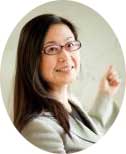
Spring has arrived, bringing with it a new academic year in Japan.
Way back in the early Meiji period, the Japanese school calendar began in September, but this was changed to the spring sometime around 1921, perhaps because in the Japanese mind the cherry blossom season seems to be the right choice for marking the start of new things. The MBSJ kicked off its 18th term in January, and convened a special board meeting in late March. The board members discussed a course of action for fully dealing with the case of research misconduct that had been a pending issue from the preceding term, and will announce later a policy for preventing further misconduct. Thanks to the support of Prof. Shigeru Kondo, president of our next annual meeting in December, we plan to host sessions on research ethics on all three days of the conference, and we will begin preparing for them several months in advance. I hope that many of you will join in these sessions to share information and understanding on this issue.
On a different note, I would like to quote a passage from former University of Tokyo President Shigehiko Hasumi’s book A Couple of Things I’ve Learned about Universities:
“Culture is without question a thing whose quality is enhanced by diversity capable of protecting that which is rare or different. A society with such a culture is one that begets truly creative individuals. And, the tediousness of out-of-touch people who just preach “Be creative” while lacking the power to fascinate others is but a reflection of the tediousness of society itself. Education must, above all, be the experience of fascination. Fascination is not something that is taught—true education is acquiring and giving practical cognizance of the fact that there truly are moments in this world where something fascinates us or where we fascinate someone else.” (Excerpted from “About the Power to Fascinate”; emphasis added)
In order to cultivate future scholars in the life sciences and molecular biology, it is absolutely essential to train them and equip them with the skills necessary for carrying out research. Those skills include not only various experimental techniques, but also things like research project management and logical thinking. I believe there is an even more fundamentally important task in this process of education—imparting the awareness that fascination truly exists within the world of science. While tastes may vary among scientists, the fascination of science is something that grips them all, giving them the raw energy for pursuing their day-to-day research.
Speaking from my own experience, I recall a moment in my first year of graduate school in which I removed a 10-day-old mouse embryo from the mother to culture it as part of my study of the technique of whole embryo culture. When I laid eyes on the embryo’s bright red heart pulsating with life, I was struck by fascination with the biological phenomenon of development.
I also vividly remember other moments of exhilaration, such as when the development of non-RI in situ hybridization made it possible for me to see mRNA localization of a specific gene across the whole embryo, and when I discovered an unexpected phenotype in the peripheral nervous system of a mutant rat. And very recently, I was thrilled when I went over some data collected by a student and encountered the possibility that a very important truth was hidden among the statistical variation.
Such moments of excitement—encounters with the fascination of science—are unfortunately rare and unpredictable opportunities, and hence are not something that can be taught or learned. They are very personal experiences, so what might be exciting to one student may not necessarily elicit the same reaction from others.
What an educator can do, however, is to share such excitement and fascination with students and develop and watch over an environment that enables students to make their own discoveries of fascination. The magic of science cannot be found in a setting where one is called upon simply to gather data in support of the leader’s working hypothesis. For students, the excitement and fascination of science are not something that can be taught or dispensed to them. Instead, they are something that must be discovered through personal experience, and represent the very foundation of science.
April 2013
Noriko Osumi
18th President of the MBSJ
Professor, Division of Developmental Neuroscience, Tohoku University Graduate School of Medicine
President's Message (Summer 2013)
Celebrating the Birth of Japan’s First Female Scientists a Century Ago
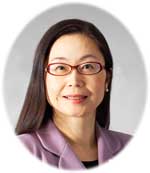
To the Members of the MBSJ
Having pledged to myself that I would write a message to our members each season, I’ve found that three months passes by very quickly! As already communicated to everyone by e-mail and in issue no. 105 of the MBSJ newsletter, I have released a President’s Report and a Board of Directors’ statement concerning research ethics, and we have conducted questionnaire survey of our members. I am pleased to say that as many as 1,022 members responded to the survey, and I thank them heartily for their cooperation. I plan to share the survey results with everyone at our 36th annual meeting, which will be presided over by Prof. Shigeru Kondo, and I hope to use the results as hard data for shaping our action plan.
Recently, we had an unexpected development that I’d like to tell you about. The MBSJ, because of its standing as association of numerous researchers in basic life sciences, joined in two joint statements issued regarding the Japanese government-led initiative to establish a Japanese version of the National Institutes of Health. The first statement was issued on June 10 by seven life science societies, and the second was released the following day by the Union of Japanese Societies for Biological Science. Both acknowledged the need to improve various inadequacies in health and medical science in Japan, such as the poor link between basic and applied research, and the limited focus on translational research that leads to clinical research, but at the same time they warned the initiative’s backers against ignoring the countless studies in true basic research that have the potential to evolve into benefits for the future. Because of the questionable budget scale and research coverage of the Japanese NIH project, we should closely monitor how the details are worked out.
Three months ago, as I pondered upon what to talk about in my next quarterly message, I hit upon the topic of female scientists. This year marks the 50th anniversary of the Vostok 6 spaceflight, which was flown solo by Valentina Tereshkova—both the first woman and the first civilian to go into space—as well as the 60th anniversary of the publication of Watson and Crick’s famous article in Nature, which was based on crystallography data that Rosalind Franklin amassed to unlock the secret of DNA’s structure. And, it was 100 years ago that three women became the first female students of Tohoku University (then Tohoku Imperial University). The university was founded under an open-door policy and offered a special dispensation that provided opportunities for admission to talented people who had not graduated from the traditional high school system. Nagayoshi Nagai, a professor of chemistry at Tokyo Imperial University, also taught part-time at Tokyo Women’s Normal School (now Ochanomizu University) and Japan Women’s College (now Japan Women’s University), and encouraged three of his brightest students there to apply to Tohoku Imperial University. The three women—Chika Kuroda, Ume Tange, and Raku Makita—took up his suggestion and enrolled in the university’s School of Science, later graduating with degrees in chemistry and mathematics. In other words, Japan’s first female university students were also the country’s first university-trained women scientists.
Diversity of people is key element for creativity in science. As I did in my previous message, I would like to quote a passage from former University of Tokyo President Shigehiko Hasumi’s book A Couple of Things I’ve Learned about Universities. The first chapter opens with these words:
“Culture is without question a thing whose quality is enhanced by diversity capable of protecting that which is rare or different. A society with such a culture is one that begets truly creative individuals.”
As of the MBSJ’s last annual meeting, women accounted for 35.1% of our student membership, and 19.6% of our general members. The percentage of female members who gave poster presentations was halfway between these two figures, 27.6%, but women made up only 3.7% of the symposium lecturers, and no women were among the organizers. Of course, age differences are one factor behind the male-female disparities, but for a society that launched a gender equality working group in 2002, there is still much room to reduce the gap in women’s involvement.
Whether they be men or women, young scientists need to have mentors who can help them to tap into their full potential. The three women who became Japan’s first female university science students owe their success in part to mentoring by Prof. Nagai, Prof. Riko Majima of Tohoku Imperial University’s College of Science (later President of Osaka Imperial University), and other local notables. A mentor is also a role model at times, and the strong inspiration they provide—feelings like “I want to be a person like that” or “I want to take up this occupation”—can be an immense source of power for younger people pursuing their careers. At the same time, those who have been members of lab group for many years need to remain aware that younger members are quietly watching them as well. After all, people are nurtured by people.
July 2013
Noriko Osumi
18th President of the MBSJ
Professor, Division of Developmental Neuroscience, Tohoku University Graduate School of Medicine
President's Message (Fall 2013)
Thoughts on Tokyo's Selection as the Venue for the 2020 Olympics: Cultivating Science Talent Is a Key to Japan's Growth as a Nation
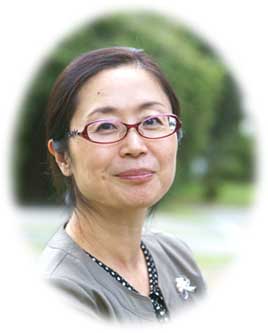
To the Members of the MBSJ
It's set—the Olympic Games are coming to Tokyo in 2020, making for a refreshingly happy piece of news for us. There are seven years to go before 2020, the time it will take this year's newborns to reach school age, and I fervently hope that Japan will complete its recovery from the March 2011 earthquake and tsunami by then.
Speaking of the Olympics, there are international competitions in academic disciplines, including mathematics, physics, chemistry, and, of course, biology, which has the International Biology Olympiad. This is an annual event that tests the biology knowledge of high school students from around the world who have passed rigorous preliminary rounds in their homelands. It has been held in Japan before, in Tsukuba in 2009. This year, the IBO was hosted in Bern, Switzerland, and the four participants from Japan made a strong showing by clinching a gold medal and three silver medals. And, in the 2011 competition in Taiwan, the Japanese contingent fell just short of a perfect record by capturing three golds and one silver—a laudable achievement that I wish had been given greater coverage by the media.
One wonders what the Japanese contestants in this year's IBO will be doing in 2020...perhaps some of them will be working on a PhD in the life sciences, maybe? These young scholars are part of the next generation of scientists who will blaze the future path of the life sciences. Such talent is a source of power for a nation like Japan that lacks plentiful natural resources. If Japan intends to evolve into a powerhouse of science and technology, one of the biggest challenges it needs to tackle is to determine how to best cultivate human resources for the sciences.
Recently, I had the opportunity to visit the University of Göttingen in Germany, so I took a tour of a facility named XLab while I was there. This center features lecture rooms and laboratories for physics on the second floor, chemistry on the third floor, biology on the fourth floor, and neurophysiology on the fifth floor, and it regularly hosts workshops for mainly high school students to enable them to experience university-level scientific experiments. A different base color is used for each floor, and the exterior walls are also decked out in a colorful scheme. XLab also hosts science camps that once were limited to domestic students but are now open to students from other countries. These camps offer the opportunity to engage in full-fledged science experiments and foster interaction among the participants. According to the center's director, Prof. Eva-Maria Neher, the name XLab embodies several meanings—experiment, experience, exciting, and expert. Supported by its staff of more than 20 professors, technicians, and administrative personnel, XLab carries out its mission of deepening students' understanding of high-level scientific experimentation through a hands-on approach. If you would like to find out more about this fascinating center, visit their website at www.xlab-goettingen.de.
The XLab initiative, which partly owes its existence to the tireless efforts of Prof. Neher, emerged from the growing alarm of German academia, industry, and government regarding the country's rapidly declining number of natural science students, a trend that began in 2000. Here in Japan, high schools and universities are increasingly partnering in science education thanks to projects such as “Super Science High Schools,” and RIKEN Brain Science Institute has run a summer program since its founding, offering courses as long as two months to students from around the globe. However, since those courses are founded on internships at existing laboratories, they end up placing a burden on the people who work there. I wish that Japan would create centers like XLab to attract more young people to the natural sciences. XLab also offers in-service training programs for science educators, playing an important role by refreshing their understanding of science.
In order to effectively cultivate future scientists, it is vital not only to bridge the gap between secondary and university education as described above, but also to provide seamless measures and close support that start at the level of primary education. This could help to resolve the current barriers that science degree earners face in obtaining teaching licenses, and to increase the number of children interested in science.
Last, but not least, I would like to remind you that the 36th Annual Meeting of the Molecular Biology Society of Japan is coming up soon, scheduled to be held on Kobe Port Island starting on December 3. Meeting President Shigeru Kondo is working with the organizing and program committees to plan all sorts of activities and events for participants. I look forward to seeing you all this December in Kobe, which will be aglow with the beautiful light festival Kobe Luminarie.
October 2013
Noriko Osumi
18th President of the MBSJ
Professor, Division of Developmental Neuroscience, Tohoku University Graduate School of Medicine
Message from the President (Early Spring 2014)
The Annual Meeting is Your Meeting!

To the Members of the MBSJ
Here's wishing you a belated happy New Year! I hope that 2014 will be a wonderful, fulfilling year for all of you.
Last December was a hectic month for me, as I am sure it was for all our members as well. It is fitting that the old Japanese word for December is shiwasu, which literally means “teacher runs,” and is said to derive from the fact that the last month of the year is a time when Buddhist priests have to busily go from place to place to chant sutras.
Of course, for the MBSJ, December is the month when we busily gather together for our annual meeting, the most recent being last year's 36th session. Thanks to the 120% effort that Prof. Shigeru Kondo delivered up to the last minute as the meeting's president, we successfully hosted an exciting gathering that drew as many as 7,836 participants, even though the event was not co-hosted with any meetings of other societies.
One of the more striking features of the scientific program was how the symposia were personally presented by their organizers, who were selected by the Program Committee and its head, Prof. Takashi Kadowaki. And, the two luncheon seminars put on by Prof. Mikiko Shiomi and her Career Path Committee were a big success, I hear—I unfortunately have to say “I hear” because I was participating in other sessions at the time as below.
The program also included Administrative Board Forums focused on scientific misconduct, which were held in six 90-minute slots, one each morning and afternoon, but lasted ten hours in total since they ran a little longer than scheduled. Since these forum meetings were held at the same time as other science-related sessions, each was attended by a few dozen participants, but all together some 200 people joined. The hard work and dedication of MBSJ Vice President and Chair of the Research Ethics Committee Yuji Kohara, fellow Vice President Keiichi Nakayama, Annual Meeting Working Committee member Akira Shinohara, and other leaders make it possible for us to hold lively discussion among not only scientists, but also representatives of research grant organizations and the media, as well as an editor for Nature. Summaries of every session are already posted on the MBSJ website, and we plan to release a full transcript in the near future. Guided by the content of these forum discussions and the input given by our members in the online survey we conducted last June, I will lead our efforts to examine the awareness-raising and educational activities that our society should implement with regard to research ethics, including consideration of whether we need to establish an organ similar to the Office of Research Integrity.
While on the topic of research ethics, I would like to mention that the University of Tokyo publicly released on December 26 an interim report on their investigation of the recent case of suspected scientific misconduct, and also sent me a letter regarding this report. Both the report and the letter were posted on our website on the following day, and, as I indicated in my comments online, the MBSJ believes that it is vital for the life sciences community to rigorously deal with the issue of misconduct in research so that we can ensure a sound future for scientific exploration. As scientists, we need to keep in mind that public funding accounts for a very large proportion of our research budgets, and hence we must strive to avoid making any missteps that would betray the trust placed in us by society. Otherwise, it would become very difficult for us to pursue basic research of our own volition.
Last December's annual meeting also examined the scientific community's relationship with society in a panel discussion on scientific policy that included as guests former Vice Minister of MEXT Kan Suzuki and Council for Science and Technology Policy member Yuko Harayama. This session was broadcast on Ustream and received various comments over Twitter. I personally had the opportunity to step up to the podium for another part of the annual meeting, an open lecture titled “Exploring the World of Life.” This lecture was designed as a TED-style presentation and I was tasked with communicating in just twelve minutes the joy of research that drives scientists. I approached this mission with a tension unlike what I would normally feel, so I rehearsed the presentation at the National Museum of Emerging Science and Innovation in September, and then did a final run-through on the morning of the lecture. We will upload a video of the talk on YouTube with the goal of reaching out to an audience even greater that the more than 700 people who attended.
The annual meeting wasn't all business, however—we also had many fun features as well, such as an art program that encompassed an exhibit of Genes to Cells covers, a science image contest, a jazz session, and more, plus we invited postdocs from overseas to actively join us. And, I am pleased to say that many people attended the bulk of the conference, all the way up to the “2050 Symposium” that capped off the afternoon of the last day. Another nice thing was the festive air reminiscent of a school pageant that enveloped the various award ceremonies and other events. We are now running a survey about the 36th annual meeting on our website, so please be sure to share your opinions—both the things that dissatisfied you or needed improvement, and the things that you liked and want to keep in future meetings. Your feedback will help us to plan the next meeting (to be presided over by Prof. Shigeo Koyasu), so let us know your thoughts, even if you did not attend last December. After all, the annual meeting is YOUR meeting, so let's work together to make the next gathering another success.
January 2014
Noriko Osumi
18th President of the MBSJ
Professor, Division of Developmental Neuroscience, Tohoku University Graduate School of Medicine
Message from the President (Early Summer 2014)
Science as Procedure
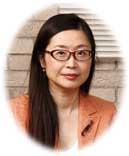
To the Members of the MBSJ
I had wanted to write this season's message a little earlier, at least when the cherry trees were still in bloom, but circumstances prevented me from doing so—namely, the recent commotion over research claims regarding stimulus-triggered acquisition of pluripotency (STAP) cells, which swept over both the global life sciences community and the general public in Japan.
I have already shared my personal views of this matter on my blog, and I issued two statements as president on March 3 and 11 to express the MBSJ's official position. Considering that the lead author of the two controversial papers published in Nature is not a member of the MBSJ, I recognized that it would be an unprecedented move to release president's statements focusing on issues surrounding specific papers by a nonmember, but, based on consultation with our Research Ethics Committee and fellow MBSJ executives, I decided that the statements were warranted by the high level of public interest in the recent turn of events.
The controversy has already ceased to be an issue for just the scientific community, given the extensive public exposure it has received—the news conference held by the lead researcher was streamed online and was featured as a nearly 20-minute top story on broadcaster NHK's 7 p.m. news program. And, who would have imagined that a scientist's name would appear in the weekly tabloids for week after week? If anything, all this coverage has reminded me of just how difficult it is to communicate information about events in the world of science to the general public.
Science is but one of the ways that humankind acquires knowledge, but it has a clearly defined procedure for telling others about the discoveries that one makes. Simply exclaiming “Eureka!” “I've got it!” or “I believe this is true!” is not enough to establish that we have made a real discovery. In the case of research aimed at demonstrating a certain hypothesis, we must find supporting evidence, accurately record that data, and confirm the reproducibility of our discovery (see footnote). If reproducibility is not achieved, then we may need to revise our hypothesis. After we have confirmed reproducibility with evidence solid enough to present to other scientists, we then share it with them for review. If necessary, we may be asked to provide supplementary data or data that are more precise. If any of the steps in this procedure are faulty or lacking, then what we have cannot be presented as science. Without the spirit of healthy critical thinking, science is not science. Indeed, the annual meetings and other conferences organized by scientific societies are intended to be forums for such critical discussion.
There is more to this procedure—after our research is published in a scholarly journal, its reproducibility will be tested by many of our peers, and it is only after the completion of this step that our findings will be accepted by the scientific community. The discovery of postnatal neurogenesis in the rat brain by Joseph Altman and his colleagues in the early 1960s was subsequently subjected to scrutiny for half a century, leading to discovery of the same phenomenon in primates, as well as its association with cognitive function and emotional behavior. Toward the end of the 1990s, research on volunteer cancer patients revealed that new neurons are formed in the adult human brain, and just this past year a study based on a groundbreaking technique using 14C found that neurogenesis also occurs in the brains of healthy adult humans as well. In 2012, half a century after publishing his seminal paper, Dr. Altman was awarded the International Prize for Biology in recognition of his contribution as the first discoverer of postnatal neurogenesis.
Over the past ten years or so, scientists have become more cognizant of the importance of public outreach and have accordingly stepped up their efforts to link their research results with the communication of science news. This can be seen in press releases on the publication of research, which now often feature titles that explicitly state expectations for how a particular discovery will be of benefit. Although scientists and the PR coordinators of research institutions use these catchphrase-like titles under the premise that the findings are still in the process of being confirmed, the members of the general public who view or read the mass media coverage all too often assume that publication of a paper means that the conclusions have been finalized—a tendency that I feel was palpably demonstrated by the recent STAP commotion.
I will lead the MBSJ in formulating a response to this issue, taking into consideration the outcomes of last year's MBSJ Administrative Board Forum and the STAP research affair. The Science Council of Japan published a revised version of its Code of Conduct for Scientists last January 25. Also, MEXT's special committee on scientific misconduct has released a report on guidelines for responding to misconduct in research activities (Japanese only) that describes the various efforts being made by research institutions, organizations that allocate research funds, scientific societies, and other scientific organizations. The CITI Japan Project (Japanese only), with cooperation from the CITI Program in the US, offers an e-learning system for learning about research ethics that includes instruction on issues surrounding scientific misconduct and authorship. This course is mandatory for all scientists involved in Japan Science and Technology Agency projects, and has been incorporated into the curriculum of educational institutions such as the Okinawa Institute of Science and Technology Graduate University. As a scientific society, it is our duty to closely examine what courses of action are realistic and significantly effective.
Misconduct in research is a vital concern for each and every member of the scientific community. It is not a problem that occurs just because of the inexperience of young researchers; it can also result from insufficient guidance by senior scientists, group leaders, and lab directors. Over the long run, making earnest efforts to prevent scientific misconduct is the wiser strategy to take, compared with the more costly and time-consuming approach of dealing with misconduct only after it happens.
Lastly, I have a bit of happy news to share with you—we received as many as 259 entries for our contest to create a mascot character for the MBSJ! The selection will be made based on online voting (Japanese only) by members (deadline: 5 p.m. on May 9, Japan time). We plan to create a lineup of giveaways featuring the selected character for distribution at MBSJ events for high schools students and so forth, so stay tuned!
Speaking of online voting, we will hold a poll for our biennial appointment of directors. Since the directors are responsible for overseeing the MBSJ's operations and steering its course, the selection process represents an opportunity for members to have their voices heard. Voting will be held online from June 23 to July 11, so be sure to cast your ballot!
Note: In some fields of science, reproducibility can be very hard to verify. For example, it is a daunting, if not impossible, challenge to test hypotheses on questions such as how a certain organism changed during the course of evolution. Also, as advances are made in the genomic sequencing of individuals, I think it will be extremely difficult to achieve reproducibility in this field even under the same exact conditions, given that 3 million base pair differences exist between the genomes of any two humans and given how epigenome modification is affected by experience and environment. It will be very interesting to see how the life sciences deal with these sorts of “irreproducible sciences.”
April 2014
Noriko Osumi
18th President of the MBSJ
Professor, Division of Developmental Neuroscience, Tohoku University Graduate School of Medicine
Message from the President (Late Summer 2014)
A Lesson from the Royal Society in How to Bridge Science and Society
To the Members of the MBSJ
Hello again from Sendai, where the sultry days of summer are starting to wind down. This marks my seventh seasonal message to all of you, and I have quite a bit of catching up to do on the whirlwind of events that has transpired since my last message in late April.
Let me start by mentioning the University of Tokyo's August 1 release of the initial report on its investigation into allegations of scientific misconduct concerning certain studies in molecular biology (http://www.u-tokyo.ac.jp/public/public01_260801_j.html). According to the report, the investigating panel found that scientific improprieties had been committed by the four researchers involved, including Dr. Shigeaki Kato, a former member of our board of directors. Given that Dr. Kato had been a part of our awareness-raising activities for preventing ethical violations in research, we earnestly responded to the allegations of scientific misconduct by his team. In particular, we sent two letters, one in November 2012 and another in the following August, to the University of Tokyo to request that they promptly investigate the accusations, and we consider their recent initial decision to be a big step forward in resolving this matter. I have the utmost respect for everyone involved in the herculean task of scrutinizing as many as 165 papers and conducting the review needed for their decision. At the same time, however, I am concerned by the inordinate amount of time that has passed since the earliest allegations of improprieties surfaced in January 2012—first came the preliminary investigation at Dr. Kato's lab, followed by the launch of a full-scale inquiry in September 2013, the release of an interim report in the following December, and then the recent initial decision made based on that report. The length of time taken suggests that there still are many problems that need to be tackled regarding how we as members of the scientific community deal with issues of research misconduct.
On August 5, just a few days after the University of Tokyo announced its findings, we learned of the heartrending news that one of our members, Dr. Yoshiki Sasai, had taken his life. On behalf of the MBSJ, I extend our deepest sympathies to his family, friends, and colleagues. I am certain that Dr. Sasai's passing came as a tremendous shock to everyone working at the Center for Developmental Biology, but I urge all of them to be strong and keep working their hardest to further advance first-rate science. Amidst this sad turn of events, all sorts of speculation about Dr. Sasai's motives is being bandied about in cyberspace, including the accusation that he was driven to his choice by pressure from the MBSJ. I would like to say here that such criticism is completely unwarranted, as the statements and requests we issued on our website regarding the STAP cell research was not specifically targeted at any individual. Moreover, the MBSJ was in no way involved with the television special on this matter that was aired in late July.
Turning to our own news, the MBSJ recently elected new directors to steer the society in the 19th term that will begin next year. With the growth of deeper bonds between science and society, the MBSJ now faces an unprecedentedly diverse spectrum of challenges, so I will do my best to help ease the transition to the new leadership.
Speaking of the relationship between science and society, I would like to share with you a recent experience of mine in this regard.
This past July, I squeezed in a visit to London between two international scientific conferences, providing myself with the opportunity to join in a Royal Society event for my first time ever. To be specific, Prof. Veronica van Heyningen, a Royal Society Fellow, invited me to attend a soiree held in conjunction with the Summer Science Exhibition that the society hosts every July. The Royal Society is the pinnacle of the United Kingdom's scientific academies, whose Japanese counterpart would be the Japan Academy, and its Fellows are conferred a medal of order from the Queen. The soiree was put on at the Burlington House, a 17th century building located on Piccadilly in the heart of London. I found the interior to be adorned with numerous portrait photos and paintings of generations of distinguished past members—perhaps a visual manifestation of the Royal Society's pride in having blazed the path for modern science. As I gazed upon the different faces, I felt a wave of nostalgia when my eyes fell on a portrait of Dr. Anne McLaren with a laboratory mouse. Dr. McLaren was jointly awarded the Japan Prize for her contributions in mammalian embryo manipulation, and her work helped to build the foundation on which scientists such as Gail Martin and Martin Evans established the field of embryonic stem cell research. And, I also came across a portrait of another prominent female scientist, Dr. Dorothy Hodgkin, who received the Nobel Prize in Chemistry for making advances in X-ray crystallography.
The Summer Science Exhibition is a public-oriented science event that has been hosted by the Royal Society's President for every year since 1769 (!), the year after the society was founded. If you would like to find out more about it, check out their visually stunning website (http://sse.royalsociety.org/2014). I think that one would have to look very hard to find a similar event outside the UK that can trace its roots back to the 18th century. Inside Burlington House I was charmed to see an old painting of tuxedoed gentlemen and finely dressed ladies curiously inspecting displays at a past exhibition, and I took note that such sensibilities remain alive today at the black-tie soiree, which Veronica referred to as a “very British” event. To me, the party, styled as a seated buffet, had the festive air of class reunion for the Fellows in attendance. And, as one amusing touch that befitted a gathering of scientists, fresh strawberry cream was served in a plastic container resembling a test tube.
It is no easy task to communicate the significance and achievements of science to the public, and hence it is very important for that communication to be carried out by not only scientists, but also people such as school teachers and the science writers who compose books and articles for publication in various media. With science becoming more and more compartmentalized and esoteric, it is almost backbreaking work to make the latest discoveries understandable to children—and to many adult members of the general public as well. Every time I need to prepare a press release on some new discovery, I struggle to strike the right balance between accuracy and comprehensibility.
It takes day-to-day effort to expand the “fan base” or “cheering squad” for science. Most scientific research is made possible by government grants that originate from taxpayers' pockets, a fact that we scientists should give more thought to on a daily basis. At first glance, public outreach activities may not seem to be connected with the advancement of science, but by making them an integral part of our everyday mission, we can combat pseudoscience, shape the way research funds are allocated, and achieve other positive results.
On a final note, the deadline for abstract submission to this year's annual meeting in Yokohama passed at the beginning of this month. This year, we are holding the conference earlier than usual, in late November. The meeting's president, Dr. Shigeo Koyasu, says that he wants to make it an excellent forum for profound discussion of science, so let's all get together in Yokohama for this wonderful opportunity!
August 2014
Noriko Osumi
18th President of the MBSJ
Professor, Division of Developmental Neuroscience, Tohoku University Graduate School of Medicine
Message from the President (Dec 2014)
To the Members of the MBSJ
As the end draws near on 2014, an especially eventful year, this will be my final message as president of the Molecular Biology Society of Japan (MBSJ).
Professor Shigeo Koyasu served as president of the 37th MBSJ Annual Meeting, which was held at the end of November at Pacifico Yokohama. Though the meeting was shorter than usual at only three days, attendance was impressive with 7,565 participants. I thank everyone for the huge turnout. This year marked the resurrection of the discusser system used at poster sessions when Professor Yuji Kohara spearheaded the 32nd MBSJ annual meeting in 2009. Many senior professors attended, and participated in the poster sessions. I was especially happy to see the ensuing lively debates on science. I myself, in collaboration with the Yokohama City Board of Education, had the opportunity to be involved in production of the Science & Art program.
Though I already mentioned the following points at the general meeting, I would like to take this opportunity to recap MBSJ activities during my time as president.
First, I'd like to elaborate on the new membership system, which includes two new classes of members. We established a senior membership option for regular members that have retired, for whom the annual membership fee will be reduced to ¥3,000, the same as for student members, and the annual meeting admission fee will be waived. It is our hope that this new system will spur increased participation in MBSJ activities. We also established a next-generation education membership option aimed at faculty involved in primary and secondary education. For them, the annual membership fee will remain the same ¥6,500 as for regular members, but as with the senior members, we waive the admissions fee because we want to encourage their participation in the annual meeting in the hope that they can convey information about leading-edge life science research, and the atmosphere of the meeting, to the next-generation of students.
Also, the Gender Equality Committee was constructively reorganized into the Career Path Committee, which under the superb leadership of chairperson Mikiko Shiomi, has been exceedingly proactive. Among the efforts of the Career Path Committee are extraction and independent analysis of data from MBSJ members (2,448 responders) that participated in the Japan Inter-Society Liaison Association Committee for Promoting Equal Participation of Men and Women in Science and Engineering (EPMEWSE) large-scale survey (total of 16,314 responders). This was then compiled into the Third MBSJ Report on Actual Conditions of Gender Equality(Japanese only), which led to creation of “Aiming for Promotion of Greater Gender Equality: Petition for Leadership Training of Women Researchers, and Establishment of Accommodative Environment for Key Life Events(Japanese only)”. Chairperson Shiomi and I presented the document to two key officials from the Ministry of Education, Culture, Sports, Science & Technology (MEXT): Science and Technology Policy Bureau Director-General Nobuaki Kawakami and Lifelong Learning Policy Bureau Director-General Junko Kawamura. We subsequently had a frank discussion with both MEXT officials on issues related to career paths and gender equality for life science researchers. It is my hope that this will eventually lead to implementation of relevant policy measures.
Lastly, I would like to address research ethics-related issues, a crucial concern that carried over from the previous MBSJ president's term. It is noteworthy that last year's annual meeting included six sessions of a research ethics forum(Japanese only), the full transcripts of which we posted on the MBSJ homepage in April. There was much confusion due to subsequent scientific misconduct regarding controversial papers that became widely publicized (Please refer to the previous President's message for details about MBSJ's responses, such as statements on our official position). Other cases of scientific misconduct also emerged, leading to MEXT guidelines on research misconduct (http://www.mext.go.jp/b_menu/houdou/26/08/1351568.htm (Japanese only)) that were adopted on August 26, and are slated for implementation from next April. Essentially, we have entered a new phase on the issue of research ethics. The guidelines lay out the responsibilities of not only individual researchers, but also research organizations. We believe universities and other research organizations are already reviewing their compliance with the guidelines, and I think the next MBSJ president, executive officers, and committee members will need to consider actions to ensure research integrity.
Going forward, it will become increasingly important for MBSJ to engage the public in a dialogue; when I became the 18th president, bioethics was an issue I had considered worthy of tackling. It is now possible to produce germ cells from pluripotent stem cells, such as iPS cells, and to more easily produce genetically modified organisms using genomic editing techniques such as the CRISPR/Cas9 system. Life scientists need to incorporate ethics into their research, and have an obligation to communicate to the public any inherent risks of that research.
Professor Hiroyuki Araki will take the helm as MBSJ President from next year. We have already scheduled the next two annual meetings. The 38th annual meeting (2015) will be held at Kobe Port Island with Ryoichiro Kageyama serving as meeting president, while the 39th meeting (2016) will be hosted in Yokohama headed up by Hidenori Ichijo. I am deeply indebted to all the people that have supported me during my two-year stint as MBSJ president, including the directors, auditors, committee members, and the secretariat. As the 18th MBSJ president's term nears its end, I am both deeply grateful to the people that supported me, and also look forward to a new beginning for MBSJ with the start of the 19th president's term. I conclude my last message with high expectations for the further growth of MBSJ. Thank you so much!
December 2014
Noriko Osumi
18th President of the MBSJ
Professor, Division of Developmental Neuroscience, Tohoku University Graduate School of Medicine
