
Message from the 19th President
 ad_t
ad_t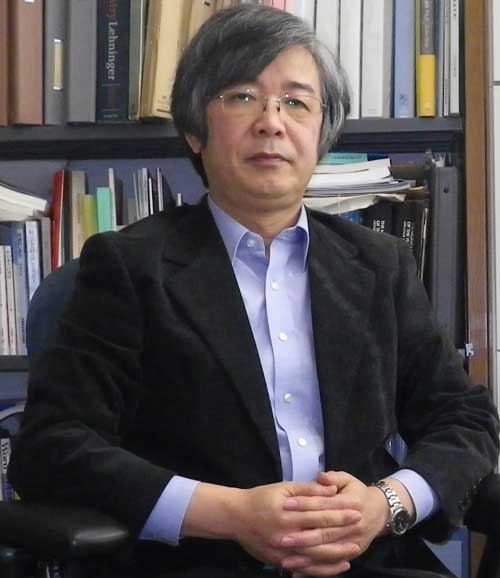
To MBSJ members
It is an honor to serve as the 19th president of the Molecular Biology Society of Japan (MBSJ) for the next two years. I will do my utmost to advance our cause, and ask for your wholehearted support and cooperation.
I remember when MBSJ was first established; I was still a graduate student, and at that time thought the annual meeting was quite a large event, requiring two meeting halls (we had roughly 600 members). In comparison, pre-MBSJ symposia were small gatherings of people from related fields that could be accommodated in a single meeting hall. Never did I imagine that one day the number of members participating in our annual meetings would exceed 7,000 as it does now. I attribute the phenomenal growth to the many diverse methodologies associated with molecular biology, and MBSJ’s proactive inclusionary stance for different scientific fields. However, I suppose problems are bound to emerge once an association becomes as large as ours.
Diversity is an important aspect of biology. This is also important for MBSJ and Japanese society at large. Through advances made by MBSJ in the formation of the Career Path Committee, which now incorporates the Gender Equality Committee, we are able to nurture promising talent by proactively promoting women and being accommodative of diverse work styles. The same applies to utilization of researchers from overseas to facilitate multi-cultural research. Embracing diversity is indispensable to discovering new talent, and it is my intention that MBSJ not lose sight of this basic concept.
Our position is to leave management of the Annual Meeting of the Molecular Biology Society of Japan to the designated organizers. English accessibility to the annual meeting has been steadily increasing. As a long-time advocate of increased globalization of our universities, I believe further progress is needed in expanding our English abilities. The purpose of the MBSJ annual meeting is not merely to showcase Japanese research; it is our hope that it will also provide a rewarding and useful experience to the many participants from neighboring countries. Thus, we believe increasing the number of overseas participants will be a positive force for improvement. Conversely, it is also necessary to keep Japanese, at least to some extent, in the laboratory because ideas and ways of thinking are rooted in culture, and language is a fundamental component of any culture. I believe Japanese remains firmly entrenched in research and this environment fosters the interaction between culturally different ideas that facilitates advancement of new research. It will likely be a challenge to strike the right balance between increasing English availability while still maintaining Japanese in research.
In recent years, the issue of “Kenkyuu Kouseisei” (literally, research fairness) has become a hot topic in the wake of advances in image processing technology and media coverage of questionable figures in published research. MBSJ has taken up this issue in the past as part of its role in educating young researchers, and we will need to continue dealing with it going forward. The Japanese expression “Kenkyuu Kouseisei” does not, in my opinion, capture the essence of the English term “Research Integrity.” The essence or soul of a researcher is devotion to discovering the truth, and this, I believe, is where integrity comes into play. In the process of conducting research, mentors pass on integrity to their students, as do senior researchers to their junior colleagues, and we as an association need to make greater efforts on this front as well. It is our hope that MBSJ can serve as a forum for discussion on these types of issues.
A key function of MBSJ activities is to develop relations with the public. We look to nurture the next generation of researchers, while also increasing awareness that MBSJ is an association created for the benefit of society at large, through activities such as dispatching lecturers to senior high schools and promoting active involvement in our annual meeting by high school students in the form of oral and poster presentations. Moreover, taxpayers fund the bulk of our research, so we have an obligation to provide them with an explanation of our research and activities, and therefore plan to take advantage of opportunities to give easy-to-understand explanations of leading-edge research at various forums such as public lectures. We also look forward to opportunities to exchange views with parties involved in science administration, including topics such as methods for disbursing research funds.
Finally, I would like to thank everyone in advance for your warm and continued support of MBSJ.
January 2015
(from Mishima)
Hiroyuki Araki (National Institute of Genetics)
Message from the President (May 2016)
As we greet the beautiful fresh greenery of our environment, I am sure that there are many in the Molecular Biology Society of Japan (MBSJ) who are hoping for renewal of progress in our field during the coming academic year. Unfortunately, we also face challenges such as the recent powerful earthquake in Kumamoto, with aftershocks still continuing in Kumamoto and Oita. Let us offer our deepest sympathy for those suffering from this devastation.
At such times, it is hard for us to know just what we as an academic society should do. I feel that first, it is important for us to confirm the safety of all our members and help them quickly return to their laboratories and carry on their research. This makes it necessary for us to ensure that they have the support they need, such as provision of temporary sites where they can continue their research and store their lab materials. What we can do, I feel, is offer an opportunity for liaison between those needing such support and the organizations or research facilities which can provide it. With this goal in mind, we have set up a "Recovery Support Bulletin Board," similar to the one used to good results five years ago after the Great East Japan Earthquake. Since many members of the MBSJ have made contributions through their own institution, the MBSJ Board of Directors also approved a donation, small though it may be. Efforts to respond to the more recent disaster may still fall short of what is needed, but I feel that they have been set into action relatively more quickly than the response five years ago. At that time I was a member of the executive committee conducting response efforts, and discussion was directed at identifying how our society should take action. That experience is being put to use again now. I feel it is necessary for the MBSJ to continue to examine how we as an academic society should respond to future disasters.
The executive officers of our society manage the MBSJ, taking into account the opinions of the Board of Directors, and this is the case in dealing with the recent disaster. There were many calls from our directors for a prompt response to the disaster as well as opinions about what should be done. The directors hold a variety of views both regarding our response to the disaster and regarding how the MBSJ itself should be operated. I imagine that is widely felt that the MBSJ is a very free society drawing together people who place little value on empty ceremony. When an academic society grows large and becomes a formally organized structure, however, it also takes on a social responsibility, meaning that we must consider the image that we should present. The Board of Directors is continuing to discuss the future path of our society, and it is already time for election of the next group of directors. The Board of Directors reflects the opinions of the members as a whole, as supported by the considerable insights of the individual directors. I urge all members of our society to take part in electing the new directors, selecting persons who will make contributions not only to the MBSJ but also to Japanese science.
Finally, once again allow me to offer my sincere hopes for an early recovery to all who suffered from the disaster and for the advancement of research.
Hiroyuki Araki
President
The Molecular Biology Society of Japan
